
For the last 3 seasons, Arsenal have been one of the best teams in Europe, but have walked away with very little silverware at the end of the year. Typically the wheels have fallen of the bus in the last 2 months of the year, where a once promising season took a foul turn for the worst.
Bottlers FC, they've been called.
This year, they finally became champions.
And honestly, I don’t think the biggest difference was tactics, though Arteta has definitely evolved through the years, especially on set pieces.
This season - availability tells the bigger story.
Now before everyone starts yelling “well obviously injuries matter,” we're not talking about injuries in the generic sense, where a club tweets a picture of someone with ice on their knee and calls it a crisis.
We're talking about actual squad continuity.
Because there’s a huge difference between:
1. A player being completely unavailable and
2. A player not starting.
Those are not the same thing.
For example, if Bukayo Saka is on the bench and doesn’t come on, he was still available. He trained. He prepared tactically. He participated in the game model during the week. Arteta could call on him if needed.
Availability is not always minutes played.
- Availability is whether your team playing style is becoming disrupted.
- Availability is when players maintain their chronic load and robustness.
And I think Arsenal finally figured that out this season.
Last year, they constantly had multiple starters unavailable at the same time. Saka out. Ødegaard out. Then White. Then Gabriel. Then Timber.
Every week Arteta was rebuilding relationships across the pitch.
People underestimate how destructive that is to team intentions, actions, and understanding. Instead of pushing onto a higher speed of play, you're back to basics because the new player doesn't know the automatisms.
You cannot build automatisms if your RB changes every week.
You cannot build pressing triggers if your front line isn't training together.
You cannot control transition moments if your players don't know who is counter pressing and who is dropping off.
This season looked completely different, but not because Arsenal suddenly had zero injuries, which they did, but because injuries were staggered throughout the season. That’s the key part. And then you had some players that didn't miss anything.
Rice was almost always available. Saliba was almost always available. Raya was almost always available. Saka was available far more often than last season.
Even when certain players weren’t starting, they were still in the squad. Still training. Still maintaining consistency within the group and building that chronic load that we know is so important to reduced risk of injury.
If we were to build a simple availability model, it would look something like this:
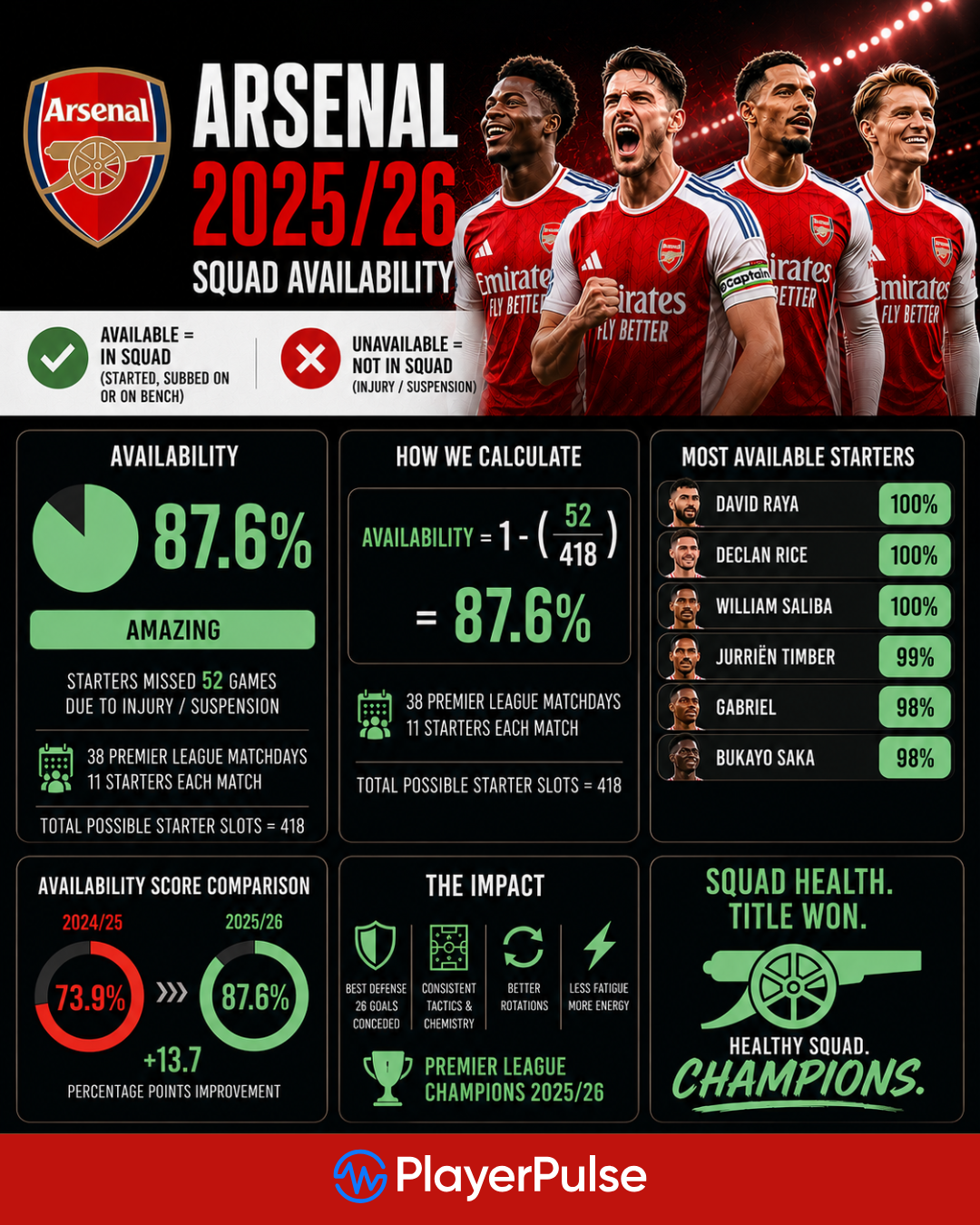
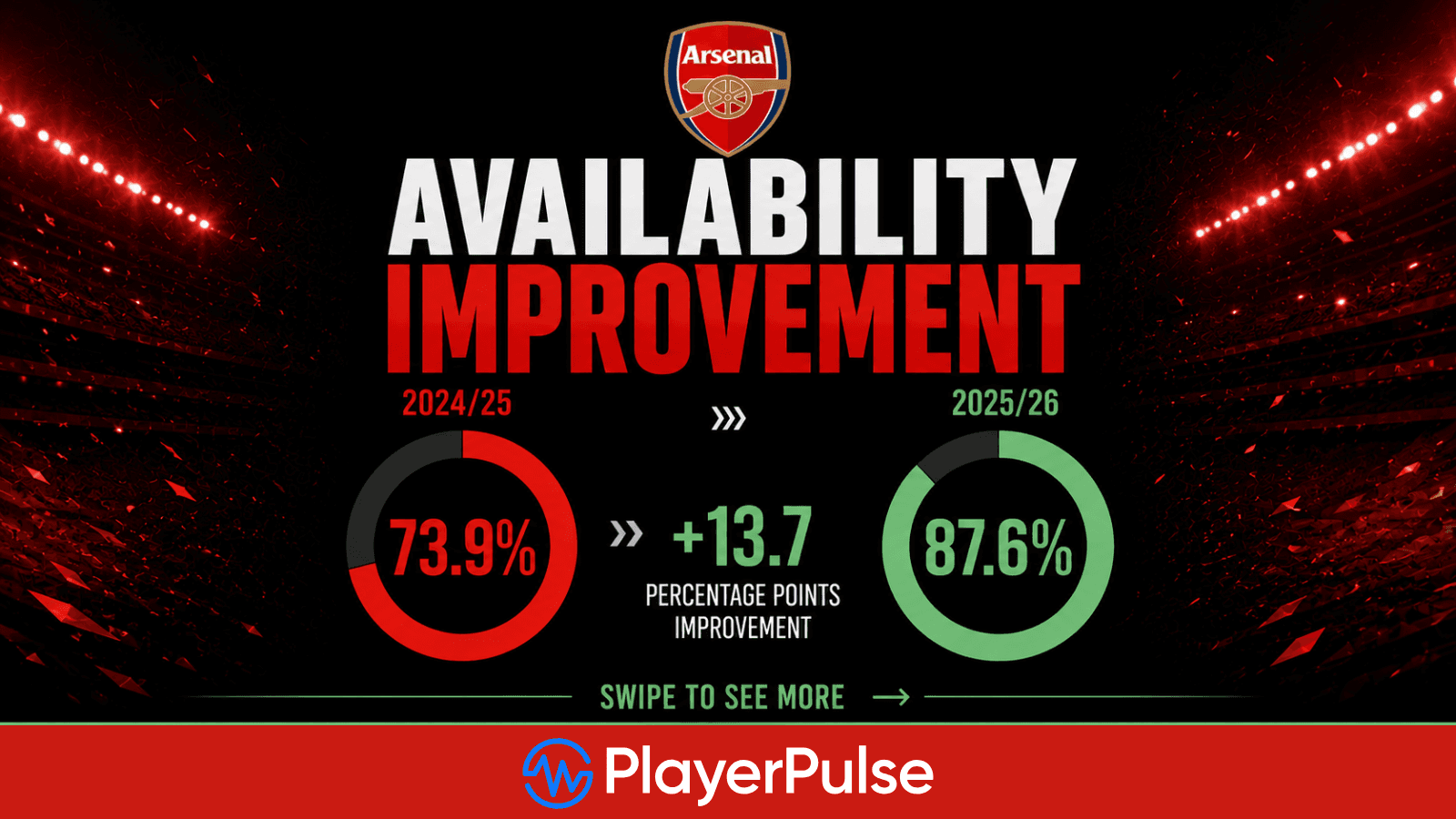
Using that framework, Arsenal probably jumped from roughly 74% availability last season to around 88% this season.
When the last 2 seasons they were within touching distance of the title, a 11% jump in availability is the difference between an empty trophy cabinet and Arsenal's first Premier League title in 22 years.
Arteta actually hinted at this multiple times throughout the season when discussing fixture congestion and injury cycles. He talked about how overloaded players create “dangerous circles” where more injuries start appearing because the same players keep compensating for unavailable teammates.
That’s exactly what Arsenal looked like in 24/25.
This year they looked physically and structurally stable, and it made the difference in the 2 month period where Arsenal usually transform into Bottlers FC.
At the highest level, fitness is not just “can players run.”
Fitness is:
Can your team maintain YOUR style of play consistently over 9 months?
This year, Arsenal finally could, and that’s why they made history.