
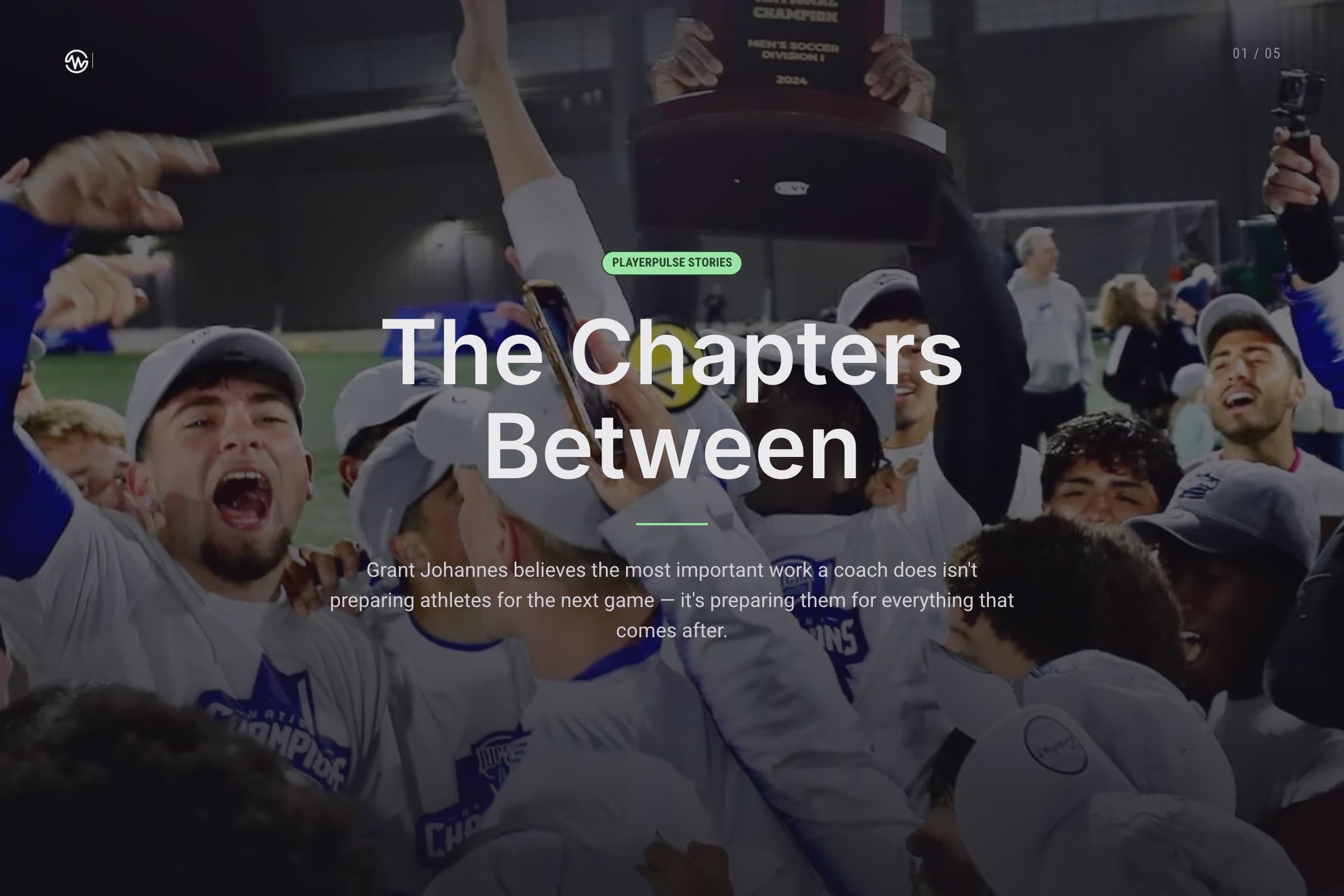
Grant Johannes believes the most important work a coach does isn't necessarily preparing athletes for the next game. It's preparing them for everything that comes after.
By the time the first athletes begin drifting toward the training field at Iowa Western Community College, Grant Johannes has already started coaching.
The performance staff gathers each morning before practice to review readiness reports over coffee, scanning sleep, soreness, workload, and recovery from the previous day's training. The numbers matter, but no one mistakes them for answers. They are simply the first clues, a way of identifying where conversations might be needed before a ball is kicked or a weight is lifted.
When the athletes arrive, Johannes closes the dashboard and watches them instead.
Years of coaching have taught him that the body often says what an athlete never will. He notices the midfielder who normally fills every silence but has barely spoken since stepping onto the field. Another player moves with a slight hitch in his stride. A defender who is almost always early rushes in just before practice begins. A freshman stretches alone instead of joking with his teammates. None of those observations prove anything on their own, but together they begin to form a picture that no spreadsheet ever could.
Only then does Johannes start asking questions.
Sometimes the conversation lasts less than a minute, other times it's much longer. The data may confirm what he has already suspected or reveal something he never could have seen from the sideline, but either way it serves the same purpose. Johannes isn't trying to collect information. He is trying to understand the person standing in front of him.
Johannes believes one of the most important aspects in any sport is availability. Not simply staying healthy enough to compete, but arriving each day physically, mentally, and emotionally capable of becoming the athlete you are trying to become. That understanding grew out of his own experience as a college player.
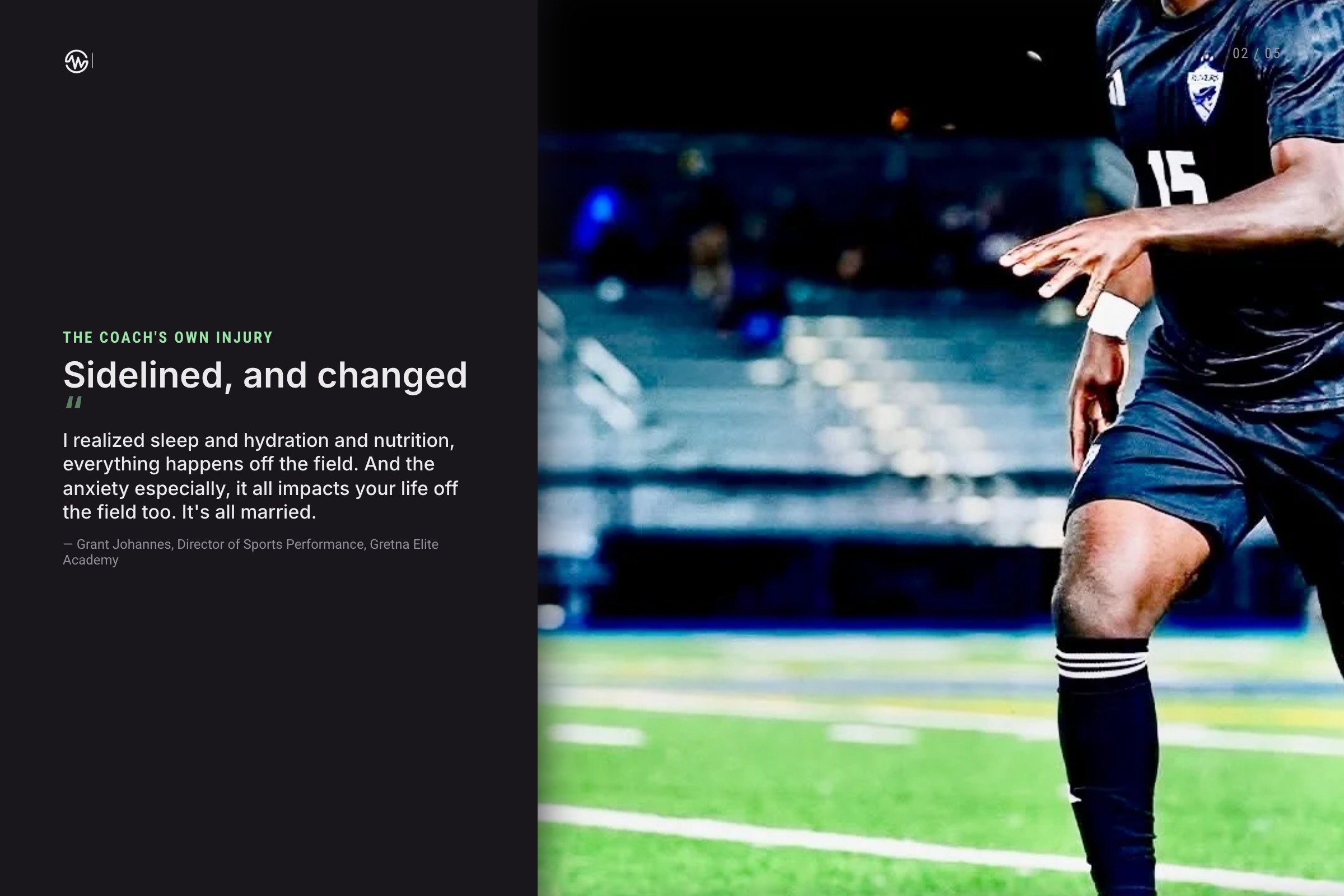
As a college soccer player, Johannes found himself sidelined for several weeks. Physically, the recovery followed the familiar rhythm of rehabilitation. Emotionally, it felt far less predictable. He had been starting. Suddenly he was then watching from the sideline, wondering whether someone else would earn his place before he returned.
"I realized sleep and hydration and nutrition, everything happens off the field," Johannes says. "And the anxiety especially, it all impacts your life off the field too. It's all married."
The injury eventually healed, but the experience permanently changed how he understood performance. Rehabilitation restored his body but it couldn't account for everything else that determines whether an athlete is truly ready to compete.
"It opened my eyes to how important availability is."
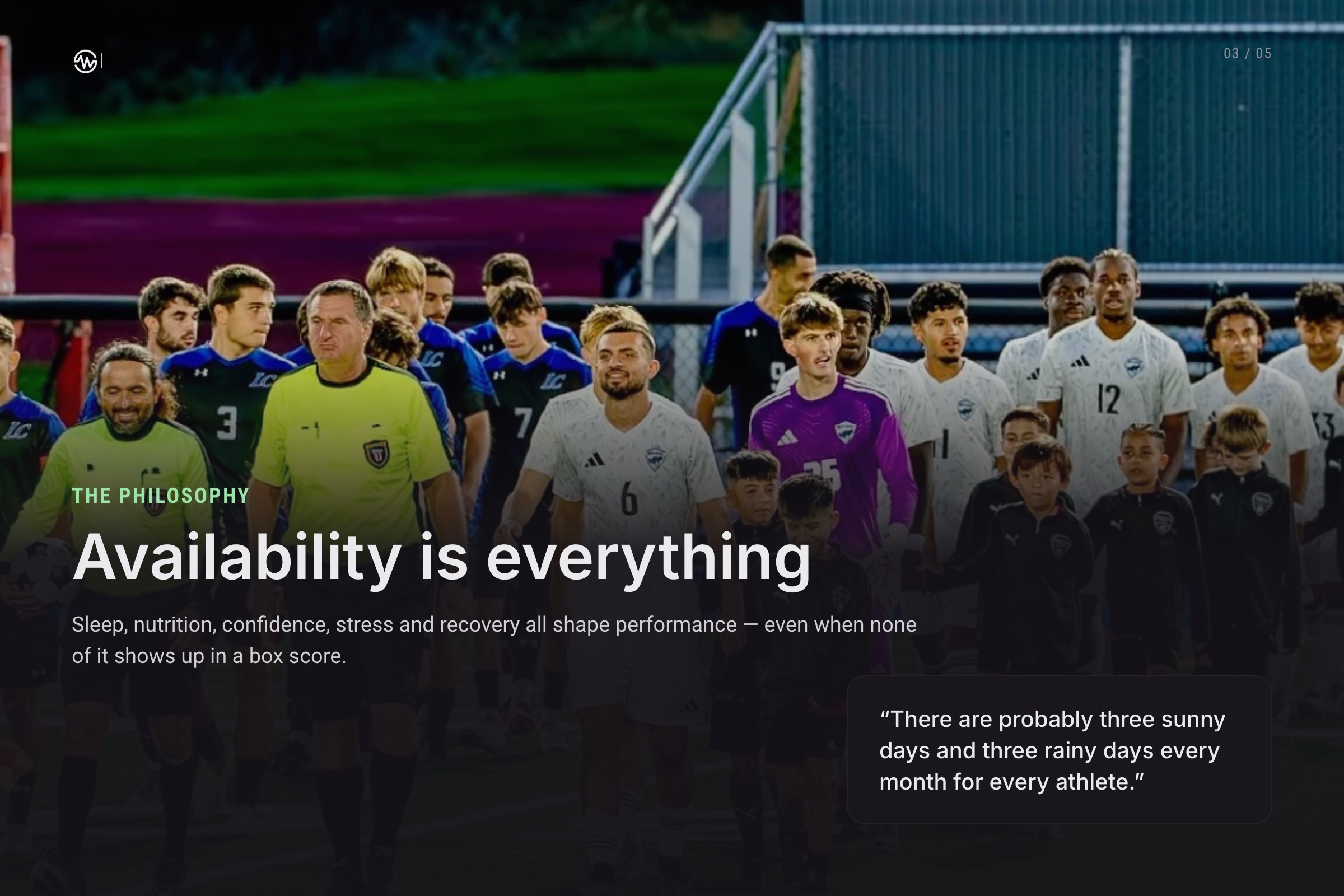
For Johannes, that means far more than avoiding injury. Sleep, nutrition, confidence, stress, relationships, recovery, and emotional well-being all shape performance, even though none of them appear in a box score. The strongest athlete in the weight room cannot help a team from the training table, and the fastest player cannot contribute if exhaustion or burnout arrives before the season reaches its most important stretch.
Most people experience athletics through competition. Fans see ninety minutes on a Saturday afternoon. Coaches live through every Monday morning, every recovery session, every difficult conversation, and every ordinary practice that quietly shapes what happens under the lights a few days later.
As Johannes moved into strength and conditioning and sports science completing his undergraduate degree at Nebraska Wesleyan University and Masters at University of Nebraska-Omaha and Fort Hayes Ste university, he found himself asking a different question. Rather than wondering how to squeeze a little more performance from an athlete today, he became increasingly interested in how to help athletes remain available often enough to become the player they were capable of being by the end of the season.
That question now follows him through the two different coaching environments.
At Iowa Western Community College, Johannes works with college athletes balancing training, classes, travel, relationships, and the constant demands of young adulthood. Away from campus, he serves as Director of Sports Performance for Gretna Elite Academy in Nebraska, where the athletes are years younger but are already beginning to navigate many of the same challenges in smaller ways.
Whether he's working with college athletes or teenagers, he has discovered a commonality. "There are probably three sunny days and three rainy days every month for every athlete," he says.
The rainy days rarely have anything to do with soccer.
Sometimes they begin with an exam that didn't go well, sometimes with a family emergency, a relationship ending, or simply a week of poor sleep. None of those experiences register on a sprint test or a vertical jump, yet each has the potential to shape the way an athlete trains that day.
Long before wellness platforms became common in college athletics, coaches relied almost entirely on observation. The best coaches were remarkably perceptive, but even they could only act on what they happened to see. Early in his career, Johannes tracked information through spreadsheets and Google Sheets, collecting data that was useful in theory but difficult to organize quickly enough to influence the day's training. Patterns often became obvious only after an athlete had already been struggling for days.
When he first encountered PlayerPulse, Johannes wasn't looking for another source of information. Like many coaches, he was skeptical that another platform would solve a problem coaching itself hadn't already addressed.
What changed his perspective was not the amount of data available but the speed at which it could become useful. Instead of sorting through spreadsheets before practice or piecing together trends after the fact, the coaching staff could begin each morning with a clearer picture of where conversations might be needed before athletes ever stepped onto the field.
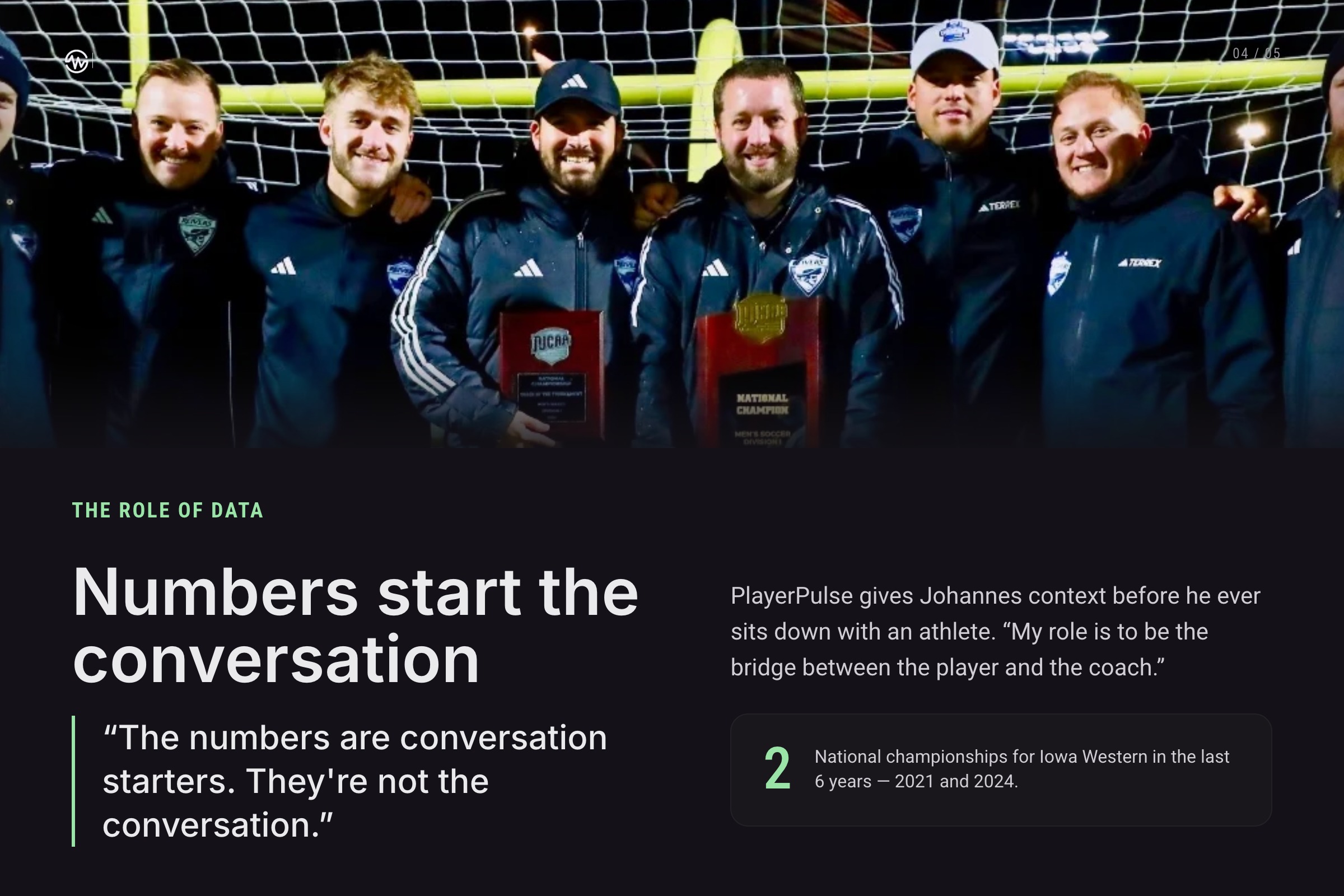
The platform didn't replace coaching; it helped ensure that fewer athletes slipped quietly through the cracks. PlayerPulse gives Johannes context before a conversation begins, but the conversation itself remains the work that matters most.
"The numbers are conversation starters," he says. "They're not the conversation."
Athletes often tell coaches they're fine, and sometimes they are. Just as often they're worrying about playing time, or trying not to become another problem for a busy coach. Having once been the athlete trying to convince coaches everything was okay, Johannes has learned to treat every readiness report as the beginning of a conversation rather than its conclusion.
Johannes' experience reflects what sports medicine research has documented: athletes often minimize or conceal symptoms despite understanding the risks, especially when competition or playing time is at stake. Specifically, “Athletes self-reported significantly fewer symptoms to team athletic trainers … compared to self-reported symptoms collected in a confidential setting…”
"My role is to be the bridge between the player and the coach."
Coaches make decisions with incomplete information because they can only respond to what they know. Athletes, meanwhile, often carry concerns they hesitate to share, whether they are recovering from a difficult week, struggling academically, or quietly questioning whether speaking up will cost them playing time. Johannes sees his job as helping each side understand the other before small problems become larger ones.
"You wear a lot of hats," he says. "Some days you're a strength coach. Some days you're a sports scientist. Some days you're almost a therapist."
College athletes are still learning who they are while balancing expectations that extend far beyond the field. Their identities continue to develop alongside their responsibilities, and those pressures inevitably influence how they train. Johannes has learned that acknowledging those realities isn't separate from performance, it's part of understanding it.
Even after reviewing the morning's readiness reports, Johannes continues searching for the small details that numbers alone can never explain. He notices the player who has grown quieter than usual, the slight hesitation in someone's movement, or the athlete whose body language suggests something has shifted since yesterday. Those observations rarely provide definitive answers, but they often point him toward the conversations that matter most.
Sometimes he follows up on something an athlete mentioned earlier in the week. Other times he simply asks another question instead of assuming he already knows the answer. Over time, those moments accumulate. Athletes become more willing to answer honestly because they know the conversation is about understanding rather than judgment, and Johannes gains a fuller picture of what each player is carrying before making decisions about training.
A readiness report may suggest where to look, but it is almost always the conversation that reveals what is really going on. The same approach follows him to Gretna Elite Academy, where the athletes are much younger but the lessons are no less important.
Johannes isn't simply preparing teenagers for next weekend's match. He's helping them develop habits they can carry into college and long after their playing careers have ended. He wants recovery to become second nature before rehabilitation is ever necessary, and for sleep, hydration, nutrition, communication, and self-awareness to feel as routine as the warmup itself. If those habits are established early, athletes arrive at the next level with more than physical tools. They arrive knowing how to care for themselves.
Teaching a fourteen-year-old how to recognize fatigue, communicate honestly with coaches, or take ownership of recovery may not produce immediate results on the scoreboard, but they shape the ordinary days that eventually determine extraordinary moments.
Johannes spends months preparing athletes for the moment they raise a trophy, knowing the moment itself is fleeting. Championships eventually become photographs, banners, and lines in a record book. The habits athletes develop along the way that make them champions, however, continue shaping their lives long after the final whistle.
Technology fits naturally into that philosophy. Used well, it creates opportunities for conversations that might never have happened and helps coaches notice the athletes who are easiest to overlook, not because they lack commitment, but because they have become experts at hiding the weight they are carrying.
Eventually, every athlete leaves organized sport. Jerseys are folded away, schedules become less demanding, and competition gives way to careers, families, and responsibilities that have nothing to do with soccer.
Not because every athlete will continue chasing elite performance, but because caring for yourself is a skill that remains valuable long after the games have ended. Learning how to recognize fatigue, recover well, communicate honestly, and ask for help serves people just as well in family units, boardrooms, and hospitals as it does on athletic fields.
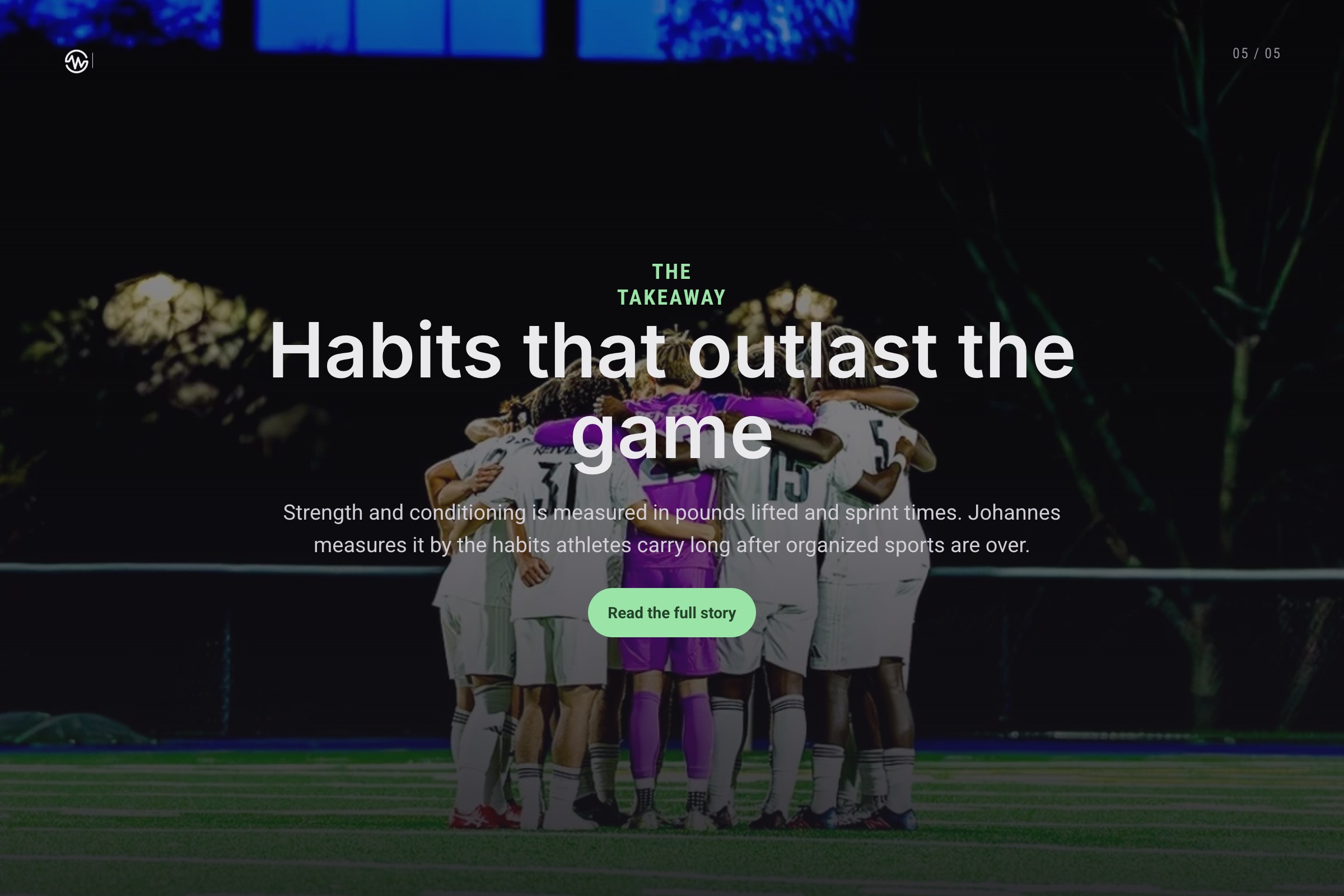
Strength and conditioning is often measured in pounds lifted, sprint times, and vertical jumps. Johannes measures it a little differently: by the habits athletes carry with them long after organized sports are over.
The technology, the dashboards, and the daily readiness reports all support that mission, but none of them replace the work itself. Every morning still begins the same way. Coaches review the numbers over coffee. Johannes closes the dashboard and watches the people behind them.
He laughs as he imagines where those athletes will be years from now.
"They'll all be old and slow like me someday," he says. "But hopefully they'll know how to take care of themselves."
For Johannes, that's the work.