
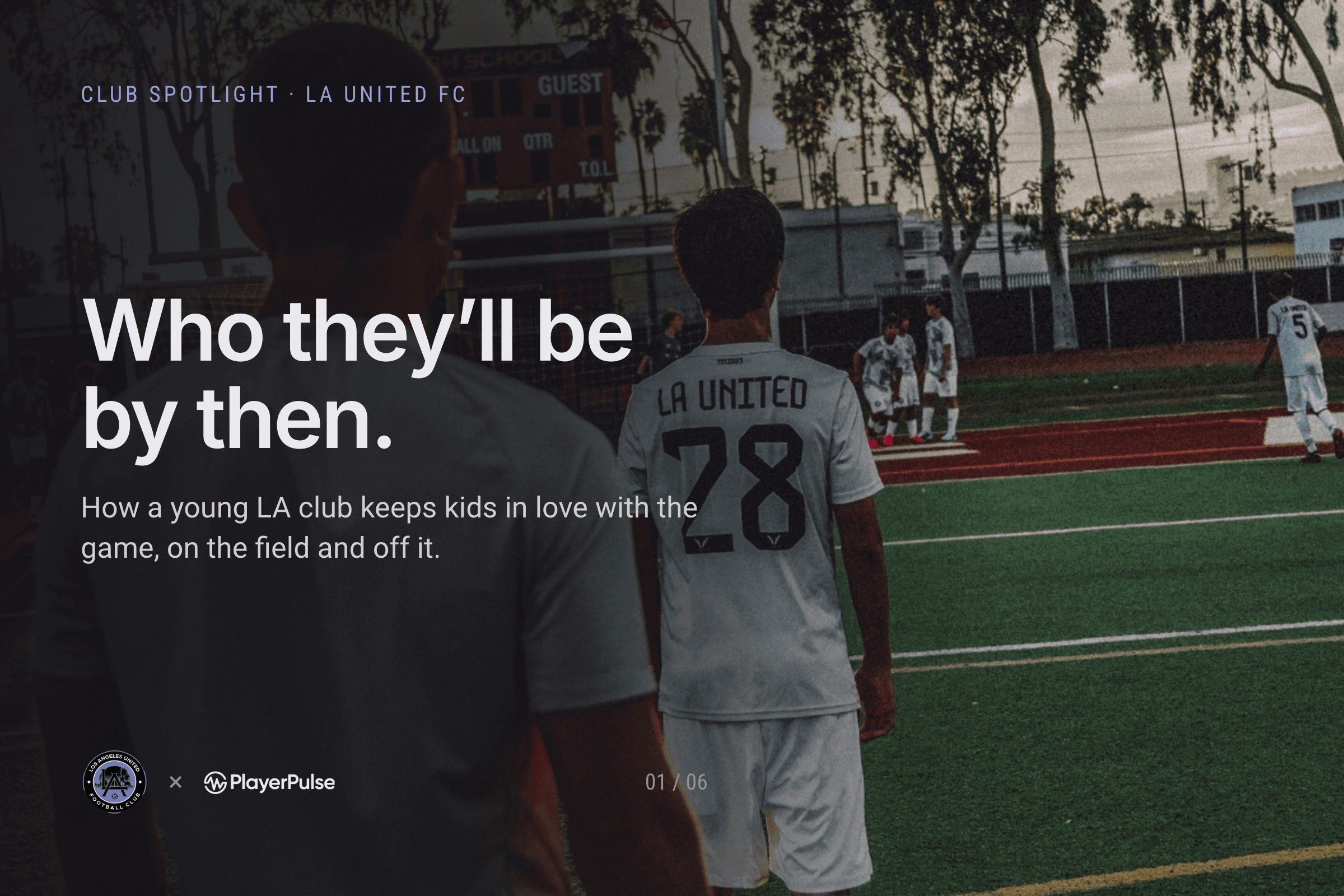
Every training session at LA United starts with something fun. It's on purpose. The fun part gets kids to the field early and playing before anyone tells them to, so by the time the technical work begins, they already want to be there.
The rest happens around the edges. After training, Club Director Luke Connor goes back over the session plan and checks who'll be out, and the messages keep coming, at 11:30 at night and again at 6 in the morning. At a young club, that attention is the job.
Connor's worry is that American youth soccer has gotten very good at getting kids to fall in love with the game and much worse at keeping them there. So LA United keeps its operation nimble, light enough that the logistics never crowd out the reason everyone showed up. Keeping kids in the game is the first step. What the club is really after is what the game can build in them.
Among coaches in Europe, where Connor recently spent time working toward his UEFA B license, one conversation keeps coming up: American kids don't love soccer yet.
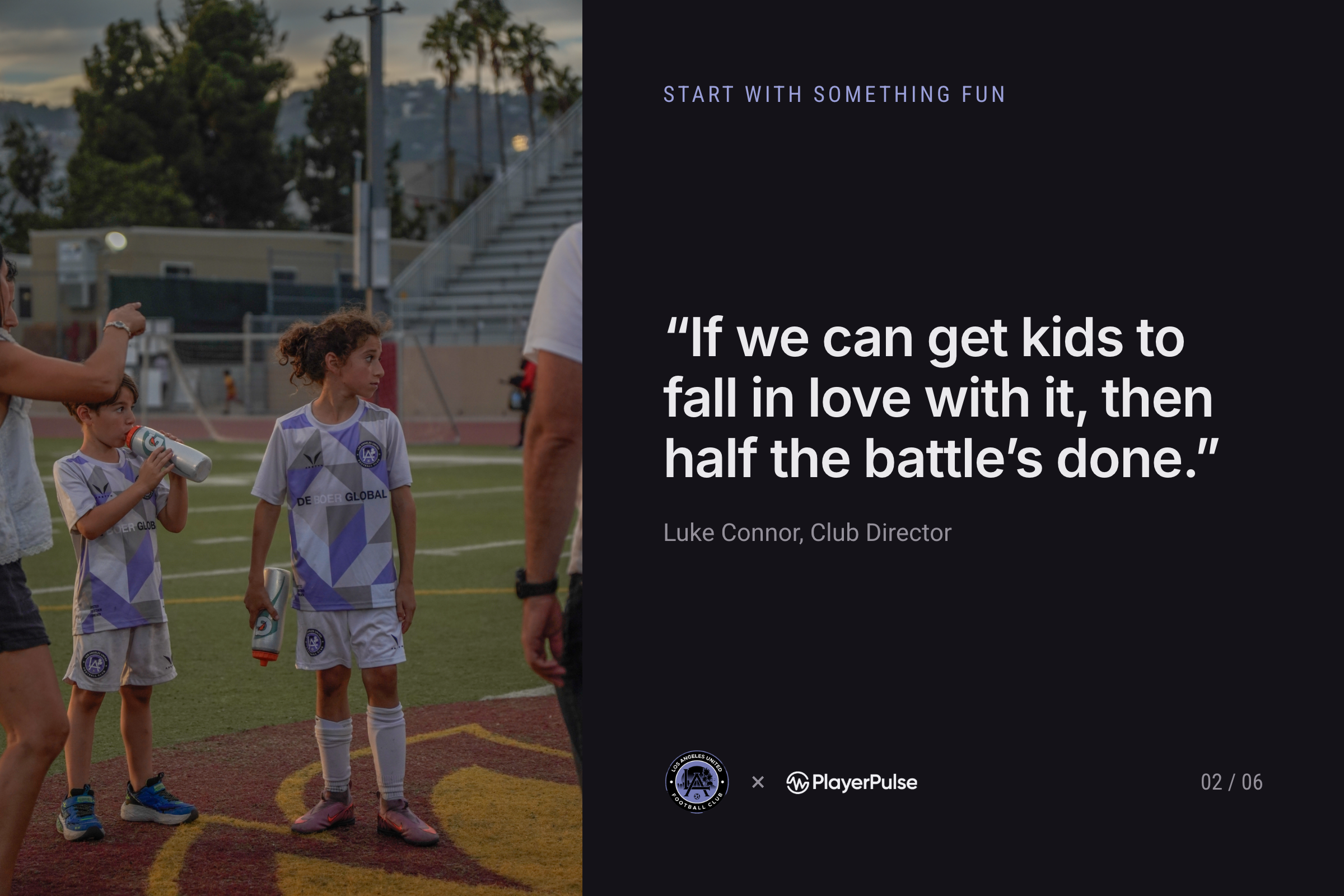
"If we can get kids to fall in love with it, then half the battle's done," he says. "When it gets tough, they're okay with pushing themselves a bit harder, doing the extra things, or accepting that maybe they're going through a rough patch."
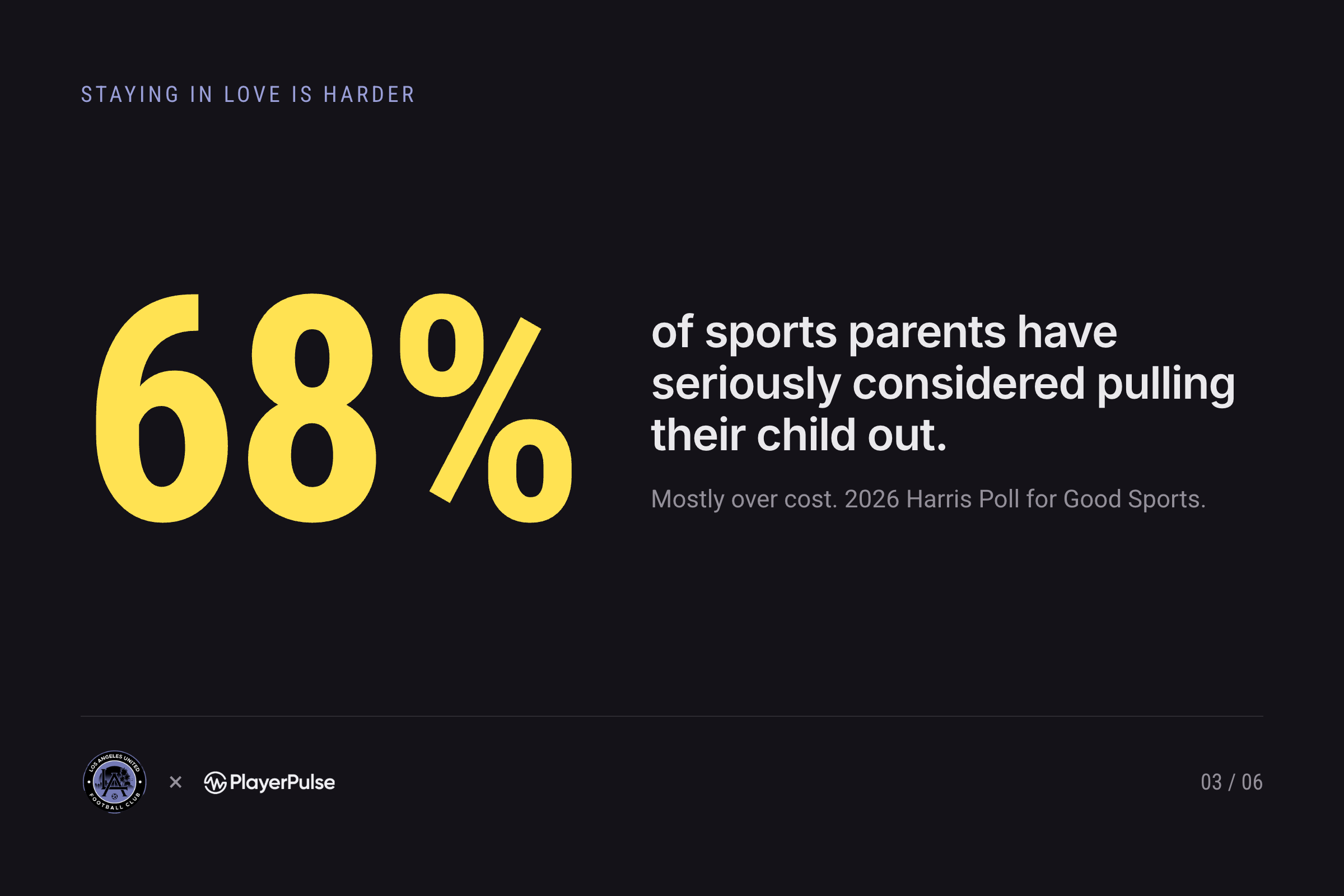
Without that, high school hands them plenty of reasons to walk away. "They're like, I could just go socialize, play video games," he says. Parents feel the pull too. A 2026 Harris Poll for Good Sports found 68% of sports parents have seriously considered pulling their child out, mostly over cost.
Falling in love with the game is different from staying in love with it. Within the PlayerPulse community, we've seen athletes like Maddie Ballard (now at Francis Marion and a PlayerPulse user since high school) lose it to burnout before finding it again. At LA United, staying has a lot to do with whether a kid feels heard.
That is how a cold email from PlayerPulse founder Matt Danaher ended up holding his attention. PlayerPulse asks players to check in daily on how they're sleeping, feeling and recovering. But does a 13-year-old need one more screen, one more thing being measured?
Connor had the same doubts. Would parents fill in the reports for their kids? Would players treat it as a chore? The demo changed that. Watching a week of player check-ins come together on one screen, he started seeing his own players in it, and two things won him over. One was the partnership: families get a discounted rate, and the club gets a donation back for every player who joins. The other was a gap he runs into constantly. "Sometimes we don't even know that a kid's injured, sore, upset," he says, "until it comes out from the parents."
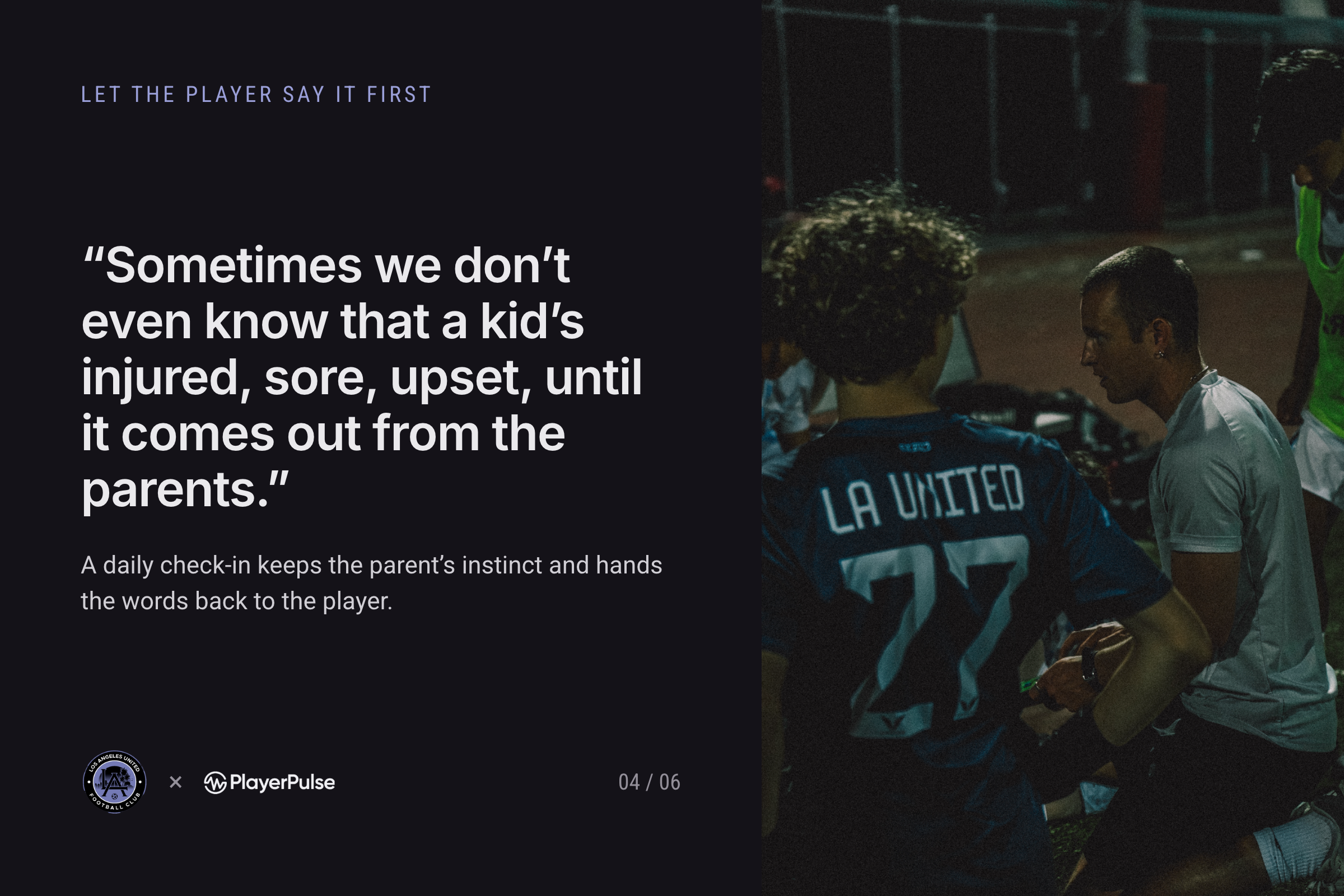
The parents usually have the right instinct. They know their kid, and they want the coach to know too. But something gets lost between the kitchen table and the training field, and the player rarely gets to say it first. "They get told, this is what's wrong, this is why you feel like this," Connor says. "I'm like, hang on. The kid's not said two words here."
A daily check-in keeps the parent's instinct and hands the words back to the player. Being able to say "my hamstring's tight" or "school wiped me out this week" is a skill a 13-year-old will need long after club soccer.
That's part of the development too. Learning to name a rough stretch, and then work through it, matters as much for the person as for the player. Improving, dealing with setbacks and figuring things out is the valuable part, and it won't always be happy and rainbows. Sometimes that means parents letting their kid work through it. "If your child is happy and enjoying it but you're upset, then that isn't a real issue," Connor says. "The end goal is that the child learns about themselves."
"They need to sit and be able to process their feelings," he adds. "It's part of why we have sport."
"Learning to deal with setbacks is our goal," Connor says. "It's tough sometimes. You have hard decisions to make. You don't perform, you deal with consequences."
None of that means winning doesn't matter, and Connor won't pretend otherwise. LA United is built around development, but parents want results. "If you want to get the best results you can, you need to make sure they're in the right mindset and the right physical state," he says.
The club's older boys play on its N1 team and want to push on to higher ECNL levels, so their sessions have to run at a top level. Some nights they're chomping at the bit. Other nights they need a talk about their place in the team, setting an example, keeping standards high and earning minutes.
Keeping players available stacks the odds in a team's favor on game day, the same thinking that has helped college programs and even Arsenal keep their best players on the field. It also keeps the game sustainable for the kid, the part most families haven't heard. A full session already stacks conditioning on top of technical work. Add a second team in the same season and a player can end up "at a mediocre physical and mental state all the time."
"Specialization doesn't mean organized, regimented training sessions, private lessons, then group elite sessions, then your club session," he says. "If you want to specialize, kick a ball in the back garden or go down to the local park and play." The research backs him up: a 2025 review of early specialization studies linked it to more injuries and worse psychological outcomes, with little or no edge in eventual success.
Cost is where the partnership earns its keep. Spending on a child's primary sport averaged $1,016 in 2024, up 46% since 2019, and LA United had already added new programming this year. So the club offers PlayerPulse player by player rather than as another mandatory fee, and the partner rate and wellness donation keep it from becoming one more line on the bill.
Danaher, who spent years as a club director in Connecticut, built the partnership with clubs like this in mind. "Luke's program is already doing the work on player wellness, and we want to help clubs like that do more of it," he says. "So we partner with the coaches, players and parents who get it." For players whose clubs aren't there yet, PlayerPulse's new player version lets them use the platform on their own.
This summer the World Cup came to Los Angeles, and clubs across the country reported a jump in interest. More than 640,000 kids in LA County were already playing soccer in 2024. The question for a young club is how many will still be playing in five years.
Connor tells his U15s that some of the best times of their lives are coming, playing with their mates at an age when everything starts to get interesting. What he really wants is for them to enjoy it while it's happening.
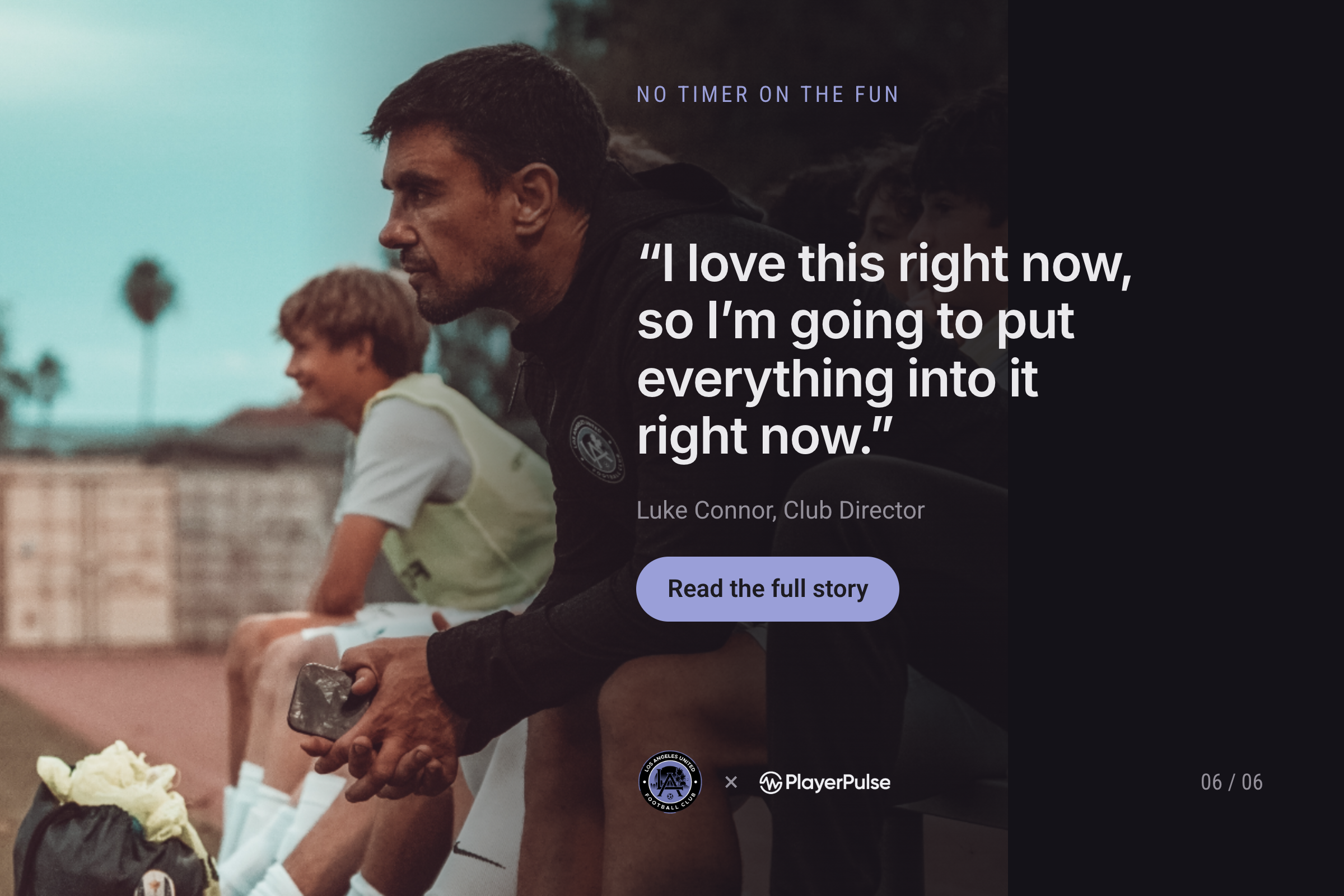
"Rather than seeing it as there's a timer on the fun," he says, "it's more a case of, I love this right now, so I'm going to put everything into it right now. Not because of the timer. Just because I love it."
The World Cup has moved on from Los Angeles. The kids who watched it haven't. Some of them will be at LA United on a weeknight this winter, and the session will start with something fun. How many will still be playing in five years is one question. The one LA United is built around is who they'll be by then, on the field and off it.